Is Crypto in Serious Trouble as Investors Face a Market Crash?
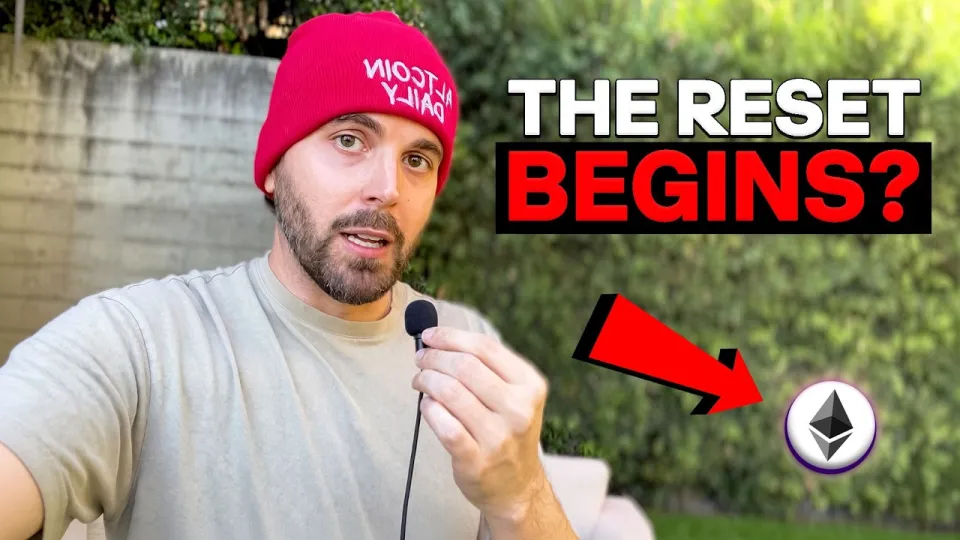
Video: Crypto Investors Are In Serious Trouble (market crash)
Need articles like this for your video? They help promote it on YouTube and Google — order them in the Telegram bot @sat_sit_bot. It writes articles around your video, embeds the video and publishes them on popular niche websites (no ads). Your first 50 articles are free.
· based on the channel Altcoin Daily
No, crypto is not in serious trouble in any structural sense, but investors are facing a genuine drawdown that tests patience. The crash debate centers on Bitcoin trading near $80,707 with a five-year compound annual growth rate of just 5.78%, a figure that reframes how strong the long-term case really looks. Altcoin Daily's breakdown walks through why this environment feels dangerous and what holders can actually control. Merchandise and channel updates are available through the Altcoin Daily shop.
What the crypto market crash actually looks like in numbers
The crash is best understood through compounding math rather than headlines. At $80,707, Bitcoin's five-year CAGR of 5.78% is far below the triple-digit annualized returns investors grew used to in earlier cycles, which is precisely why sentiment has soured. A market that once doubled in a year now delivers returns closer to a savings product, and that gap between expectation and reality drives most of the fear.
The drawdown also exposes how much of the retail base entered near local highs. When price falls and the long-term average return compresses at the same time, the psychological effect is larger than the percentage move suggests. Altcoin Daily frames this as the core problem: the asset has not broken, but the narrative of effortless gains has.
Why the drop feels worse than the percentage suggests
Position sizing and entry timing explain most of the pain. An investor who bought near a cycle top feels a 20% decline very differently from someone who accumulated over years, even though both hold the same asset. The video's discussion of market conditions makes clear that the emotional weight comes from concentration, not from the asset's fundamentals.
A second factor is the constant stream of macro commentary. Every headline about regulation, liquidity or institutional selling amplifies the sense that something is broken. In practice, the same conditions that produce fear also produce the discounts long-term buyers wait for.
How long-term holders are responding to the selloff
Experienced holders treat a crash as a scheduling problem, not a verdict. The most common approach is to keep contributions steady, avoid checking prices daily, and reserve cash specifically for deeper drawdowns. One widely shared habit is simply not logging in for weeks at a time, which removes the temptation to react to noise.
A practical framework looks like this:
- Define a fixed amount you can invest regardless of price.
- Keep a separate cash reserve for a further 20–30% decline.
- Set price alerts instead of checking charts hourly.
- Review the thesis quarterly, not daily.
- Never add leverage to a position you already cannot watch calmly.
Averaging down works only when the position size still lets you sleep, which is why sizing comes before conviction.
Is this a crash or ordinary market manipulation?
Many traders argue the move is manipulation rather than a structural break. Thin order books, stop hunts below obvious support levels and sudden wicks are familiar features of crypto markets, and they produce declines that reverse faster than fundamentals would justify. That view does not deny the loss, it disputes the cause.
The distinction matters for strategy. If the drop is manipulation, the correct response is patience and limit orders. If it reflects a real change in demand, the correct response is a smaller position. Since nobody can prove which is true in real time, the safe answer is to size for the worse case and keep buying power available.
Questions crypto investors keep asking during a downturn
Investors want specifics, not reassurance, and three themes dominate. The first is whether the current cycle still delivers the returns of previous ones, especially given Bitcoin's 5.78% five-year CAGR and the observation that Bitcoin has printed higher highs each cycle while Ethereum has not matched that pattern. The second is what would have to happen for large corporate Ethereum holders, such as the treasury strategy associated with Tom Lee, to start selling their ETH. The third is how Solana fits into a long-term portfolio, with some holders projecting $1,000 SOL by 2028.
None of these have clean answers, but they share a structure: each depends on a thesis you can write down and test. If you cannot state in one sentence why you own an asset and what would make you sell, the crash will make that decision for you at the worst possible moment.
Where to find the channel's updates and merchandise
The channel's official store is the only product link shared in the breakdown: Altcoin Daily merchandise store. Everything else discussed in the video is analysis rather than a promotion, so treat any other link claiming to be official with caution.
Summary
The crypto market is in a painful drawdown, not a terminal collapse, and the numbers tell the story better than the headlines: Bitcoin near $80,707 with a 5.78% five-year CAGR means returns have normalized while expectations have not. The investors in real trouble are those who used leverage, sized positions too large, or bought without a written thesis. Everyone else faces a test of patience that history suggests is survivable. Altcoin Daily's breakdown is a useful starting point for framing that decision, and the channel's merchandise shop is where its official products live.
Key takeaways
- Bitcoin traded at $80,707 as of October 24, 2026, according to a figure cited in the discussion.
- At that price, Bitcoin's five-year compound annual growth rate was 5.78%.
- The Altcoin Daily breakdown frames the drop as a market crash that has investors worried.
- Long-term holders describe the dip as an accumulation window rather than an exit signal.
- Some traders dismiss the move as routine manipulation instead of a structural crash.
Questions & answers
Is crypto actually crashing or is this normal volatility?
Both descriptions can be true at once. The decline is real and measurable, but crypto has repeatedly produced 20–30% drawdowns inside longer uptrends. What makes this one feel severe is that Bitcoin's five-year CAGR has fallen to 5.78% at $80,707, so the recovery narrative is weaker than in past cycles.
Should I buy more during a crypto market crash?
Only with money you will not need for years and only if your position size already lets you stay calm. A common approach is to keep a fixed contribution schedule plus a separate cash reserve for a further 20–30% decline. Averaging down without a reserve leaves you unable to act if prices fall further.
Why has Bitcoin outperformed Ethereum across cycles?
Bitcoin has historically set higher highs each cycle while Ethereum has not matched that pattern, which is a frequent criticism raised by holders. The gap reflects different supply schedules, demand drivers and narratives. It does not guarantee the pattern continues, so treat it as an observation rather than a rule.
What would make large Ethereum treasuries start selling?
Treasury-style ETH holders typically sell only when financing costs, shareholder pressure or collateral requirements force the issue. A sustained decline that raises the cost of maintaining the position is the most likely trigger. Watching those disclosures matters more than watching daily price candles.
Source: Crypto Investors Are In Serious Trouble (market crash) · Markdown version